
The best setup is a single hybrid queue with separate intake lanes for scheduled appointments and walk-ins, browser-based entry so nobody downloads an app, and walk-in capacity reserved in small blocks across the day instead of dumped at closing time. Research on outpatient scheduling confirms no single allocation policy wins everywhere, so start with intake lanes and a two-week pilot tracking wait time, fill rate, and no-shows before you lock anything in. Ezseat handles the browser-first part out of the box.
TL;DR:
- Reserve walk-in slots in small, dispersed blocks throughout the day rather than in a single end-of-day batch to reduce backlog spikes.
- Run two-week pilot tests of different capacity splits, comparing fill rates and no-show reductions before adopting a permanent policy.
- Use a short intake taxonomy and human oversight for initial routing decisions to prevent chaos and ensure priority cases are correctly identified.
- Focus on software features like browser-based queue entry, multi-queue support, automatic waitlist filling, and clear reporting to manage both appointments and walk-ins effectively.
- Implement distributed reserves and visible dashboards to improve flow and staff buy-in without solely relying on increasing staffing levels.
Table of Contents
- Quick Operational Checklist: What To Set Up Today
- How Should You Split Capacity Between Appointments and Walk-Ins?
- Triage Rules That Keep a Hybrid Queue From Turning Into Chaos
- What Features Actually Matter in a Hybrid Queue System
- Run a Short Pilot Before You Change Anything Permanently
- How Ezseat Handles the Appointments-and-Walk-Ins Split
- What Most Operators Get Wrong About Mixing Queues
- Set Up Your Hybrid Queue With Ezseat
- Research and Internal Resources
- Sources
Quick Operational Checklist: What To Set Up Today
You don't need new hardware or a six-week rollout to fix a chaotic front desk. You need clear lanes and a way to measure what's actually happening.
- Split your queue into lanes. At minimum: appointments, priority/urgent, walk-ins, and express (quick jobs under a few minutes). Keep the entry rule for each lane to one sentence a new hire could follow.
- Turn on browser-based joining. Customers tap a link or scan a code, no app store required, and get a text or call when it's their turn.
- Reserve walk-in slots across the day, not just at the end. Assign one person as the triage owner for the shift.
- Set simple flow limits. Cap how many tickets sit unattended (work-in-progress limits) and flag anything waiting past a set age.
- Start measuring today: average wait per lane, no-show rate for booked slots, fill rate for walk-in reserves, and time-to-serve from check-in to service start.
That last point matters more than it sounds. Most shops that "wing it" have no idea their no-show rate is significant until they record it carefully for a week.
How Should You Split Capacity Between Appointments and Walk-Ins?
The instinct is to protect appointments and treat walk-ins as whatever's left over. That backfires more often than it helps, mainly because a single end-of-day buffer for walk-ins creates exactly the kind of unpredictability you're trying to avoid.
Distributed reserves work better for most small operations. Instead of one walk-in block at 4 p.m., hold two or three smaller blocks spread through the day. Simulation studies on mixed scheduling show that scheduling booked patients early and spacing reserve capacity across shifts cuts overtime and keeps walk-in backlog from spiking all at once.
- Short, low-variability services (a quick haircut, a food truck order): overbook lightly and let walk-ins fill naturally between appointments.
- Longer, variable services (a clinic consult, a full grooming package): reserve fixed slots and resist the urge to squeeze in "just one more."
- Event or venue check-in: treat walk-ins as a separate lane entirely, since arrival timing is unpredictable by nature.
There's no universal formula here. Queueing research on outpatient scheduling found that the right policy depends on how demand compares to capacity and how long customers will actually tolerate waiting, which varies by business and even by day of the week.
Pro Tip: Run two different allocation splits for two weeks each, compare fill rates side by side, then pick the one that produced fewer canceled walk-in slots. Don't guess. Test it.
Triage Rules That Keep a Hybrid Queue From Turning Into Chaos
The single biggest mistake operators make is dumping every arrival, booked or not, into one undifferentiated backlog. When everything looks the same in the queue, priority appointments get buried behind a walk-in who showed up first.
Fix that with a short intake taxonomy and a named owner for triage decisions:
- Service type (consult, cut, table for two, ticket pickup)
- Estimated length (so staff can gauge how a lane is moving)
- Contact method (text vs. call for the notification)
- Party size or resource needs (chair, table, exam room)
Keep a human checking automated routing decisions for the first one to two weeks before trusting the system to sort entries on its own. Guidance on AI-assisted triage recommends exactly this staged approach: classify, route, and have a person confirm the call until the taxonomy proves itself.
Add basic flow controls on top: a cap on unattended tickets per lane, and an escalation rule (anything waiting past 20 minutes past its estimate gets flagged to the triage owner). Work queue management principles point to the same core components: intake, classification, ownership, and flow limits, whether you're running a support desk or a barbershop.
What Features Actually Matter in a Hybrid Queue System
Skip the vendor comparison and focus on what the software needs to do. A hybrid queue system built for appointments and walk-ins should cover:
- Browser-first join flow. No app download, no account creation friction for the customer.
- Multi-queue, multi-device support. One lane for appointments, one for walk-ins, both visible from a phone or tablet at the front desk.
- Public display and notification options. A screen showing ticket numbers, plus SMS or call alerts, so nobody's shouting names across a waiting room.
- Custom queue fields. Fields you actually need (service type, party size) rather than a fixed form built for a different kind of business.
- Automatic waitlist filling. When a booked slot no-shows, the system should offer it to the next walk-in automatically rather than leaving a chair empty.
- Reporting exports. You need the wait-time and fill-rate numbers out of the system, not locked inside it.
- Integration awareness. Think about whether it needs to talk to your point-of-sale, clinic records system, or event ticketing tool, and check data-handling basics like who can see customer contact details before you roll it out.
Run a Short Pilot Before You Change Anything Permanently
Two weeks is enough to see whether a new allocation policy or lane structure actually works. Any shorter and you're reacting to noise, not a pattern.
- Set a baseline week first. Track average wait, time-to-serve, no-show rate, and staff overtime hours before touching anything.
- Run the pilot for two weeks with your new lane structure and distributed reserves in place.
- Watch three secondary signals during the pilot: how often tickets get reassigned between lanes, how often a "closed" ticket has to reopen, and how frequently staff escalate to a manager. Rising numbers on any of these usually mean your intake taxonomy needs work, not your staff.
- Decide with a simple threshold. If no-show rate drops or fill rate improves without a spike in overtime, keep the policy. If not, adjust one variable and run another two weeks.
Before you touch staff schedules, test the policy on a spreadsheet or a basic simulation. Heuristic scheduling research shows that exact optimization for combined appointment and walk-in systems is often impractical, but heuristic rules tested this way perform well enough to trust in production.
How Ezseat Handles the Appointments-and-Walk-Ins Split
Ezseat was built around the exact problem this guide walks through: one system, two intake types, no app required. Customers join a queue through a browser, whether they booked ahead or showed up on the spot, and staff manage both from a phone or tablet without switching tools.
The feature set maps directly onto the checklist above:
- Browser-based entry for walk-ins and a receptionist kiosk view for staff-assisted intake
- Automatic waitlist filling when a booked slot opens up unexpectedly
- SMS and call notifications so customers aren't stuck watching a door
- Public display screens for ticket numbers in waiting areas
Clinics using online check-in through Ezseat have seen faster, more accurate intake and shorter waits, and businesses running walk-in waitlists report smoother flow during peak hours without extra front-desk staff. A reasonable pilot: configure two lanes in Ezseat, appointments and walk-ins, and run it for two weeks against the KPIs above.
What Most Operators Get Wrong About Mixing Queues

Every operator I've seen struggle with this made the same three mistakes: one undifferentiated backlog, inconsistent tagging (one staffer calls it "urgent," another calls the same thing "priority"), and walk-ins only getting worked in after appointments run dry, which guarantees the worst wait times land on your walk-in customers every single day.
The fastest fix isn't more staff. It's distributed reserves, one named triage owner per shift, and a dashboard everyone on the floor can actually see. Teams buy in faster when you frame it as a two-week trial, not a permanent policy change, and when the wait-time numbers show up somewhere visible instead of living in a manager's head.
— Ezseat
Set Up Your Hybrid Queue With Ezseat
If the checklist above sounds right but you're not sure your current setup can handle it, that's the gap Ezseat was built to close. Browser-based entry means walk-ins join without downloading anything, multi-queue support keeps appointments and walk-ins visible on separate lanes, and automatic waitlist filling catches no-shows before they leave a slot empty.
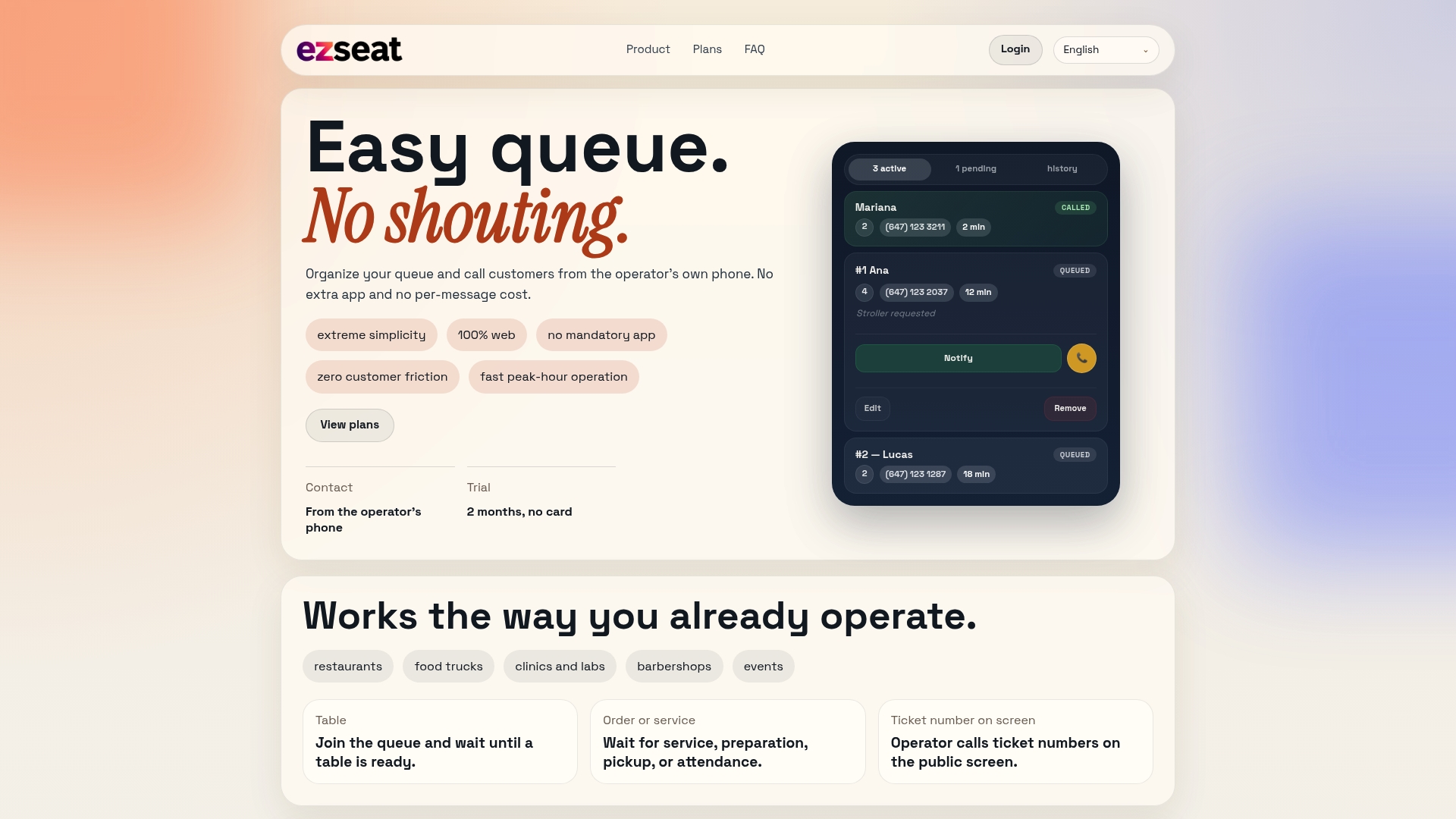
Set up two lanes, run the two-week pilot described above, and watch your fill and no-show numbers move before you commit to a permanent policy. You can test the exact configuration this guide walks through at no cost, often starting with a free trial available from queue management providers. Head to the Ezseat landing page to start the trial and get your first lanes running today.
Research and Internal Resources

For deeper reading on the scheduling math behind this guide, the Management Science study on outpatient walk-ins and the simulation optimization research on mixed scheduling are the two most useful academic sources. On the practical side, Ezseat's own guides on web-based waitlist setup and phone queue management cover configuration details this article didn't have room for. If you're running a larger event with both registered and walk-in attendees, FlowLab's EventFlow platform is worth a look for visitor-flow tracking at scale.
Sources
- Managing Outpatient Service with Strategic Walk-ins | Management Science (2023)
- Simulation optimisation for mixing scheduled and walk-in patients | PMC
- Dynamic resource allocation and scheduling for appointment-based systems with walk-ins (2024)
- Work queue management: How to control backlogs and keep work moving (Workhint blog)