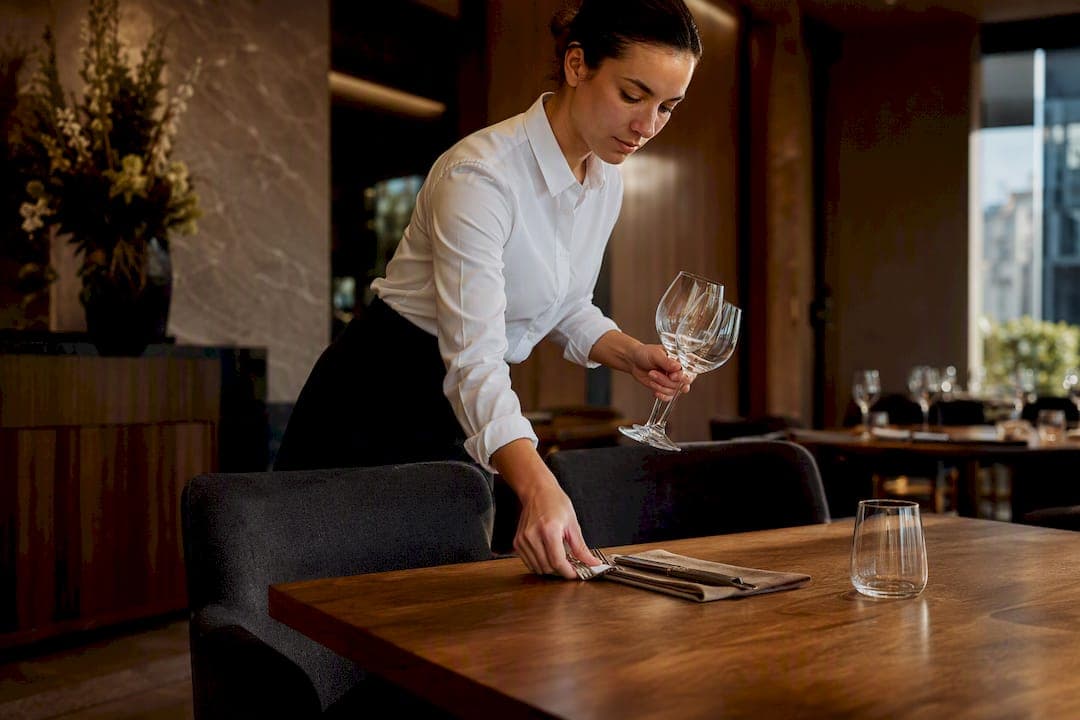
Cut 10 to 30 minutes of dead time per table by tightening host and service steps, running a faster peak menu, and switching your waitlist to a web-based system — that combination reliably buys one extra turn on a busy night. The biggest wins come from removing wasted minutes between phases, not rushing anyone's meal. Below is the full breakdown, starting with the moves that pay off fastest.
TL;DR:
- Implement a digital waitlist system to allow guests to join remotely and receive automated updates, significantly reducing crowding and mis-seating at the door.
- Enforce full-party seating during peak hours and train hosts to provide realistic wait times, which prevent underutilized seats and improve turnover efficiency.
- Optimize staff processes through standardized SOPs, pre-bussing, and dedicated roles for food running and drink refills to cut idle time between service phases.
- Focus on trimming the slowest phases, such as order to food and bill to departure, by adopting faster menus, kitchen display systems, and contactless payment options.
- Conduct a 90-day rollout starting with host and waitlist improvements, then layer in menu, POS, and kitchen tech upgrades while continuously monitoring and adjusting based on data.
Table of Contents
- What Is Table Turnover Improvement, and Where Do You Start?
- Which Tactics Save the Most Minutes per Table?
- How Do You Measure Table Turnover and Set a Realistic Target?
- What Staff Training and Scheduling Changes Actually Work?
- Can Menu and Kitchen Changes Really Speed Up Service?
- Does Your Floorplan Waste Seats You Already Have?
- Which Technology Investments Cut the Most Minutes?
- Where Should You Start This Week, This Month, and This Quarter?
- Where Do Drink Service and Food Running Slow You Down?
- How Do Happy Hours and Time-Limited Offers Affect Turnover?
- Publisher Perspective: Why Queue Control Is Often the Fastest Lever
- Ready to Stop Losing Tables at the Door?
- Sources
- FAQ
What Is Table Turnover Improvement, and Where Do You Start?
Table turnover rate measures how many parties sit at a given table during a service period, and improving it means shrinking the gaps between one party leaving and the next one ordering, not shortening how long people eat. The formula is simple: covers served divided by the number of tables. A 40-seat dining room that serves 120 covers on a Friday night has a turnover rate of 3. Push that to 3.5 and you have added ten more covers without adding a single seat.
The fastest, lowest-cost lever is almost always the front door and the host stand, not the kitchen. Digital waitlists and staggered reservation windows reduce door crowding and help make sure a table gets refilled the moment it clears, which is exactly the kind of dead time most restaurants bleed without noticing. Everything else, from menu tweaks to kitchen display systems, builds on that foundation.
Which Tactics Save the Most Minutes per Table?
Start with the moves that cost nothing but a policy change, then layer in the ones that need a small tech investment. Here is the priority order that tends to produce results within the first two weeks.
- Enforce complete-party seating during peak windows. Seating a party of four when only two have arrived wastes two seats for the wait time. During your two busiest hours, hold the table until the full party is present or seat them at the bar instead.
- Train hosts to quote realistic wait times and steer walk-ins toward open seating. A host script that says "the wait is 20 to 25 minutes, but we have two seats at the bar right now" moves bodies without losing the sale.
- Standardize combined trips and pre-bussing. Servers who clear plates as they deliver drinks, rather than making a separate trip for each, shave several minutes off every table cycle. Training staff on pre-bussing and consistent service steps is one of the most repeatable ways to speed up flow without making guests feel hurried, according to Toast's operational research on table turnover.
- Present the check at the natural close of the meal, not five minutes after. Servers should read plate status, not wait for a guest to ask.
- Adopt QR-based or handheld payment at the table. This is the single biggest chunk of dead time in casual dining: the wait between "check dropped" and "card processed."
- Set a two-minute table reset standard. Bussers need a staging cart with linens, silverware, and sanitizer within arm's reach, not a walk to the back.
- Run a smaller, faster peak-hour menu. Fewer decision points mean faster ordering and fewer questions sent back to the kitchen.
- Use a kitchen display system to batch and prioritize tickets instead of relying on paper slips that pile up out of order.
- Move your waitlist online. A digital, web-based waitlist lets guests join from their phone and get a text when their table is ready, instead of hovering by the host stand.
Each of these attacks a different phase of the table cycle, and they stack. Removing three minutes here and five there across four phases is how a restaurant finds a full extra turn without touching how long anyone actually eats. Bill Feeds points out that small savings in multiple phases compound into meaningfully more covers per night, which is a different mental model than "rushing tables."
Pro Tip: Pilot one change at a time for a week before stacking the next one. If you introduce a new host script, a new payment method, and a new menu on the same Friday, you will not know which change moved the needle, and you will not know which one to keep if something goes wrong.
How Do You Measure Table Turnover and Set a Realistic Target?
Table turnover rate equals total covers served divided by number of tables during a service period. Average table time, measuring the duration from seating to departure, is a useful companion metric for identifying where time is lost during service.
Break that table time into four measurable phases: seating to order, order to food arrival, eating time, and bill to departure (plus reset time before the next seating). Each phase responds to a different fix. A slow seating-to-order phase points to menu complexity or an understaffed floor. A slow bill-to-departure phase almost always points to payment friction.
Benchmarks vary sharply by concept, and there is no single "good" number that applies everywhere. Targets have to match your service style, according to Mapcon's guidance on restaurant SOPs.
| Concept | Typical turns per service period | What drives the ceiling |
|---|---|---|
| Fine dining | 1 | Long courses, wine service, expected pacing |
| Casual dining (dinner) | 3.5 | Full-service expectations, moderate menu size |
| Fast-casual / QSR | 4 to 6 | Counter ordering, minimal table service |
These ranges come from Tableview's benchmark data. Run a 30-day baseline before changing anything: log seating and departure times for two weeks, identify your slowest phase, then apply one targeted fix and recheck weekly. A realistic first goal is shaving 10 to 15 minutes off your slowest phase within a month, not doubling your turnover rate overnight.
What Staff Training and Scheduling Changes Actually Work?
The people running your floor determine whether any of this sticks. Process changes without training just create confused servers and inconsistent guest experience.
- Write down the core SOPs. Define exactly what pre-bussing looks like, when a combined trip happens, and when a check gets dropped, in one page hosts and servers can reference.
- Run a five-minute pre-shift briefing covering the day's reservation load, any known large parties, and one process reminder.
- Cross-train bussers and runners on host duties. A 30 to 60 minute rush is exactly when you need a float body who can seat guests while the regular host manages the waitlist screen.
- Stagger reservation windows in 15-minute increments instead of clustering everyone at 7:00 PM, so the kitchen and floor never face a single wall of tickets.
- Tie incentives to smoother shifts, not speed for its own sake. Faster turns generally mean more tables per server, and more tables mean more tips. Frame it that way to staff, not as a productivity mandate.
Measure the staff-side impact with simple time audits: have a manager clock ten random tables through each phase once a week. If pre-bussing training isn't landing, you'll see it in the eating-to-bill gap before a guest ever complains. Staff buy-in tends to hinge on this framing. Improvements should read as "your shifts run smoother and tips go up," not as management policing the clock, a point Toast's operational research backs up directly.
Can Menu and Kitchen Changes Really Speed Up Service?
Yes, and often faster than any front-of-house fix. A shorter peak-hour menu reduces decision paralysis at the table, which shortens the seating-to-order phase before a single dish gets cooked.
- Cut your peak menu to your 15 to 20 best-selling, fastest-to-plate items, and print it separately for Friday and Saturday dinner service.
- Write tighter dish descriptions so servers spend less time answering "what comes with that."
- Pre-portion proteins and pre-chop vegetables for anything on the peak menu so cooks aren't doing knife work mid-rush.
- Batch tickets by course and station on a kitchen display system rather than firing one paper slip at a time.
- Flag rush-hour tickets in a priority lane so a four-top's entrees don't sit behind a to-go order.
Kitchen display systems in particular show up consistently in the data: shops that switch from paper tickets typically see prep times drop by roughly 15 to 20%, according to Tableview's analysis. Pilot a peak menu on your two busiest nights for three weeks, tracking order-to-food time before and after. If the gap doesn't close, the problem is probably kitchen staffing or plating complexity, not the menu itself.
Does Your Floorplan Waste Seats You Already Have?
A dining room with mismatched table sizes bleeds capacity every single night, because a two-top gets stuck sitting a party of three, wasting the room a real four-top needed.
- Group tables by size in the same section so hosts can seat fast without hunting for a combo that fits.
- Keep the host stand within clear sightline of every section, not tucked behind a wall where a table sits empty for three minutes before anyone notices.
- Enforce the complete-party rule harder during your two peak hours than during slow stretches, when a little flexibility costs nothing.
- Stagger reservation times in 15-minute blocks so the floor never gets hit with 20 parties at once.
- Standardize the reset: a busser cart stocked with linens, silverware, and sanitizer should get a table turned in about two minutes, not five.
None of this requires new furniture. It requires someone walking the floor with a stopwatch once and fixing the choke point that's actually there.
Which Technology Investments Cut the Most Minutes?
Not every tech upgrade pays off equally, and the order you roll them out in matters as much as which ones you pick.
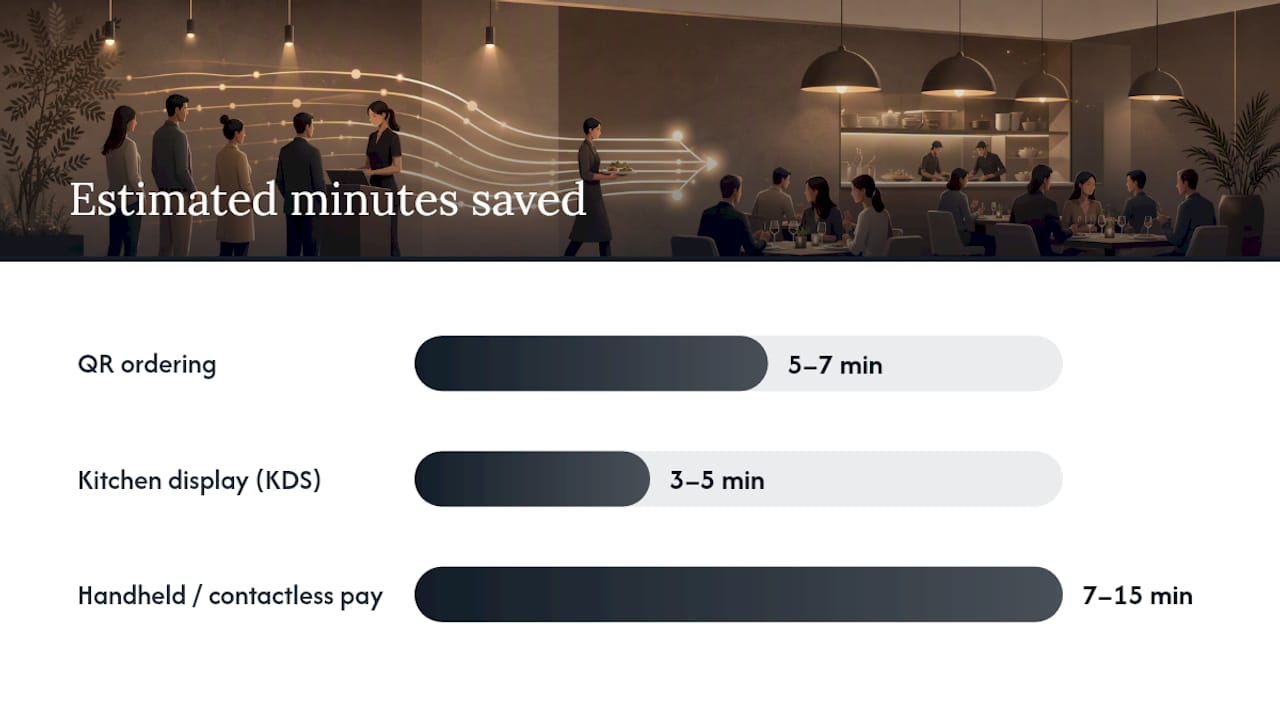
- QR ordering can cut the seating-to-order phase from a typical 8 to 12 minutes down to roughly 3 to 5 minutes, an estimated 5 to 7 minute savings per table, according to Bill Feeds' operational case studies.
- Kitchen display systems shave an estimated 3 to 5 minutes off order-to-food time by cutting the 15 to 20% prep-time reduction Tableview reports into faster ticket completion.
- Handheld POS and contactless payment can cut 7 to 15 minutes off the bill-to-departure phase, since the server never has to walk to a terminal and back.
- Digital waitlists help reduce host-stand bottlenecks by allowing guests to join remotely and receive updated table availability notifications, improving wait management.
Estimated minute savings by fix: QR ordering (5 to 7 min), KDS adoption (3 to 5 min), handheld/contactless payment (7 to 15 min). Stack two or three and you are looking at 15 to 25 minutes of reclaimed table time on a busy night.
This is where a no-app queue system earns its place in the rollout. A no-app queue system runs entirely in a web browser, so guests join a waitlist without downloading anything, and the host manages the line from a phone or tablet instead of shouting names across a packed lobby. A public ticket display keeps guests updated without a staff member repeating status updates all night, and that alone tends to cut the door crowding that causes mis-seated parties and abandoned walk-ins. Displays that keep guests informed automatically are one of the more overlooked fixes here, and Jupiter AV's guide to restaurant digital signage covers how that visibility reduces the "how much longer" questions that pull staff away from actual service.
For rollout sequencing: start with the waitlist system, add QR ordering next, layer in a kitchen display system, then pilot handheld POS last. That order minimizes disruption because each step builds on staff comfort with the last one, an approach Tableview's pilot sequencing guidance also recommends.
Where Should You Start This Week, This Month, and This Quarter?
A 90-day rollout beats trying to fix everything on one chaotic Friday.
- Week 1: Write the host script, enforce the complete-party seating rule during peak hours, set the two-minute reset standard, and have a manager time ten tables through each phase to establish a baseline.
- Week 2 to 4 (Month 1): Pilot a digital waitlist on your two busiest nights, test a trimmed peak menu, and run a pre-shift training session on pre-bussing and combined trips.
- Month 2 to 3: Evaluate a POS or kitchen display system pilot against your baseline numbers, roll out a tip-linked incentive structure, and adjust seating layout if the data shows a specific section lagging.
- Ongoing: Recheck your numbers weekly. If a change increases turnover but guest complaints or online reviews dip, roll it back and isolate what changed. A faster table means nothing if the guest felt rushed getting there.
Guardrails matter more than speed here. If average table time drops but your tip percentage or repeat-visit rate drops with it, you've cut into hospitality, not dead time, and that's the one trade-off worth reversing immediately.
Where Do Drink Service and Food Running Slow You Down?
Kitchen speed and seating get most of the attention, but a lot of dead time hides in the gaps between them, specifically in drink service and food running.
A table that waits eight minutes for a second round of drinks isn't eating slower, it's just sitting idle waiting for a server who's buried in another section. Track your drink-to-table time separately from your food-to-table time for a week; if the drink gap is wider, the fix is usually a dedicated barback or expo role during peak hours rather than more servers.
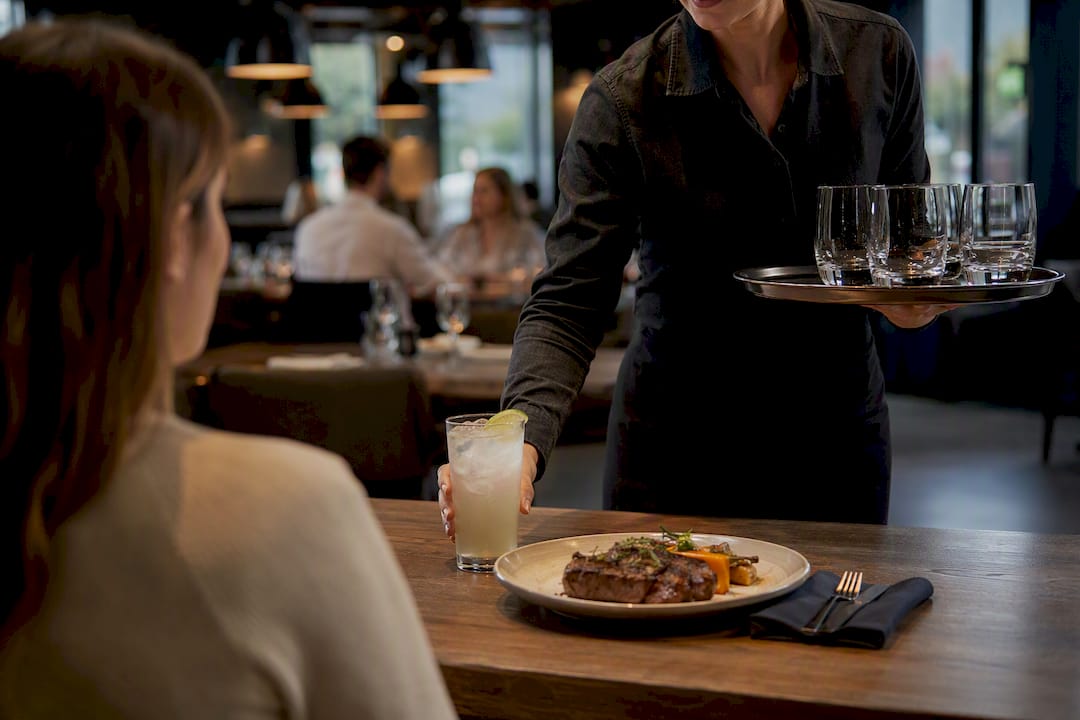
Food running has its own failure mode: a plate sits on the pass for four minutes because the assigned server is mid-conversation at another table. Assign a dedicated food runner during your two busiest hours instead of expecting servers to run their own tickets. That one role change frequently closes more time than any menu tweak, because it removes the single point of failure where a busy server becomes the bottleneck for an entire section.
Drink refills deserve the same scrutiny. A server who proactively refills water and asks about a second round while delivering entrees eliminates an entire extra trip later. Map your service flow phase by phase, the way you would for kitchen tickets, and you'll usually find one or two roles are absorbing delays that have nothing to do with cooking or seating at all.
How Do Happy Hours and Time-Limited Offers Affect Turnover?
Pricing and promotions can pull covers into off-peak hours, which is a different kind of turnover win than shaving minutes off a busy Friday.
A happy hour that runs from 4:00 to 6:00 PM shifts demand into a window that would otherwise sit half-empty, effectively creating turns that wouldn't have existed. That's a genuine capacity gain, not a rush tactic, because you're filling dead hours rather than compressing busy ones.
Time-limited offers work differently at peak hours, and they carry real risk if handled poorly. A "table for 90 minutes" policy on a Saturday night can backfire if guests feel a clock ticking over their meal, which erodes the exact satisfaction you're trying to protect. If you use a soft time limit, communicate it at seating, not halfway through the meal, and never enforce it rigidly for a table that's clearly still ordering.
Prix fixe or fixed-course promotions during peak windows can also help, since a set menu naturally moves faster than an à la carte order with substitutions and special requests. The trade-off is guest choice, so this works best as an optional peak-hour menu rather than a blanket policy. The common thread across all of these: promotions should either fill genuinely slow hours or simplify the ordering decision, not pressure anyone to eat faster.
Publisher Perspective: Why Queue Control Is Often the Fastest Lever
Most restaurants reach for a POS overhaul before they fix the front door, and that's usually backwards. Starting with host and waitlist controls tends to produce the fastest return with the least disruption to staff, because you're not retraining anyone on a new payment system, you're just giving the host a better tool. Yelp for Business's research on turnover points the same direction.
The pilots that fail almost always share one root cause: no clear host rules and no staff training to back up the new tool. A digital waitlist without a "no incomplete parties" policy behind it just moves the same bottleneck onto a screen. Own case studies and setup guides reflect that pattern consistently: the technology only works as well as the rules a manager enforces around it.
— Ezseat
Ready to Stop Losing Tables at the Door?
Every tactic above works better when your front door isn't the bottleneck. Guests join your line from a web browser, no app download, no account creation, so you capture the walk-in who would otherwise wander off rather than wait in a visible crowd. Hosts run the entire line from a phone or tablet, sending automatic table-ready texts instead of scanning a lobby for faces.
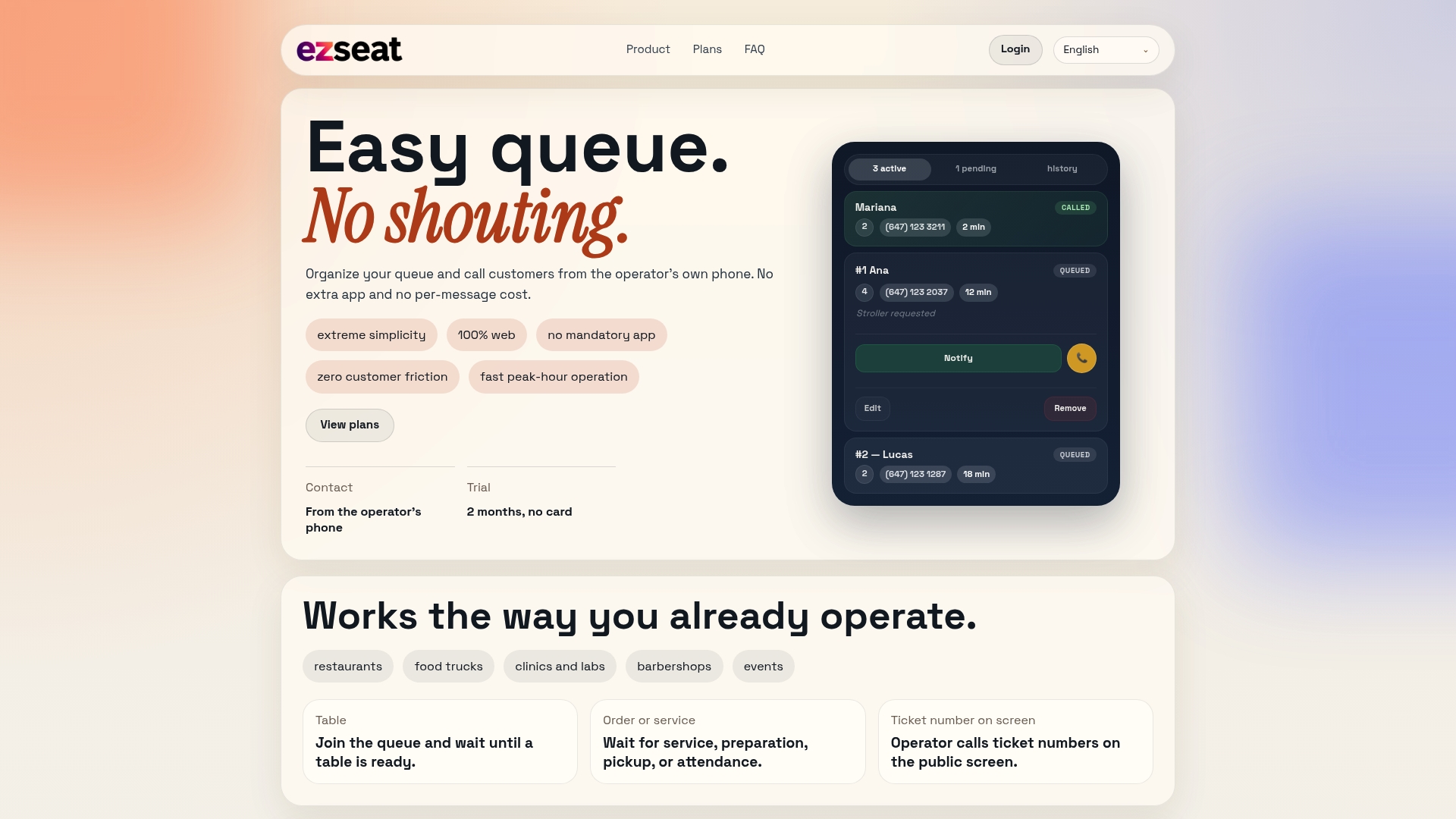
A trial gets you a working web-based waitlist running in under an hour, with a public ticket display option if you want guests to see their status without asking staff. A trial with no upfront cost allows you to measure the door-crowding difference on your own busiest nights before committing to anything. If you're ready to see what a cleaner front door does for your numbers, Ezseat and run it against your next two Friday nights.
Sources
- How restaurant SOPs improve efficiency and operations — Mapcon (2025)
- Table turnover rate — Toast POS blog
- Why table turnover rate matters—and 7 ways to improve yours — Yelp for Business (2024)
- Restaurant Table Turnover — How to Serve More Customers 2026 — Bill Feeds
- Calculate and optimize restaurant table turnover rate — Tableview
FAQ
What does "table turnover" mean?
Table turnover is how many times a table gets seated and cleared during a service period, calculated as total covers served divided by number of tables. A higher rate means more parties served without adding seats.
What is the 30/30/30 rule for restaurants?
The phrase isn't a standardized industry framework with one fixed definition, so treat any version you see with caution. It's more useful to track your own table cycle in phases (seating to order, order to food, eating, bill to departure) and target the specific phase that's actually slow.
What are some strategies to reduce staff turnover in restaurants?
Clear SOPs, cross-training that reduces single-point failures during rushes, incentives tied to smoother shifts rather than raw speed, and short pre-shift briefings all help staff retention while also improving table turnover, since a confident, trained floor moves faster without feeling rushed.
How can I improve my restaurant's turnover ratio?
Attack the slowest phase first using time-audit data, then layer in a digital waitlist, a trimmed peak menu, and faster payment options. Small savings in several phases compound into a genuine extra turn per night, according to Bill Feeds' case studies.
Does a no-app waitlist like Ezseat actually reduce wait times?
It reduces door crowding and mis-seating rather than shortening how long a table stays occupied, and that alone tends to make wait estimates more accurate and reduce walkaways, since guests can join from their phone instead of hovering by the host stand.