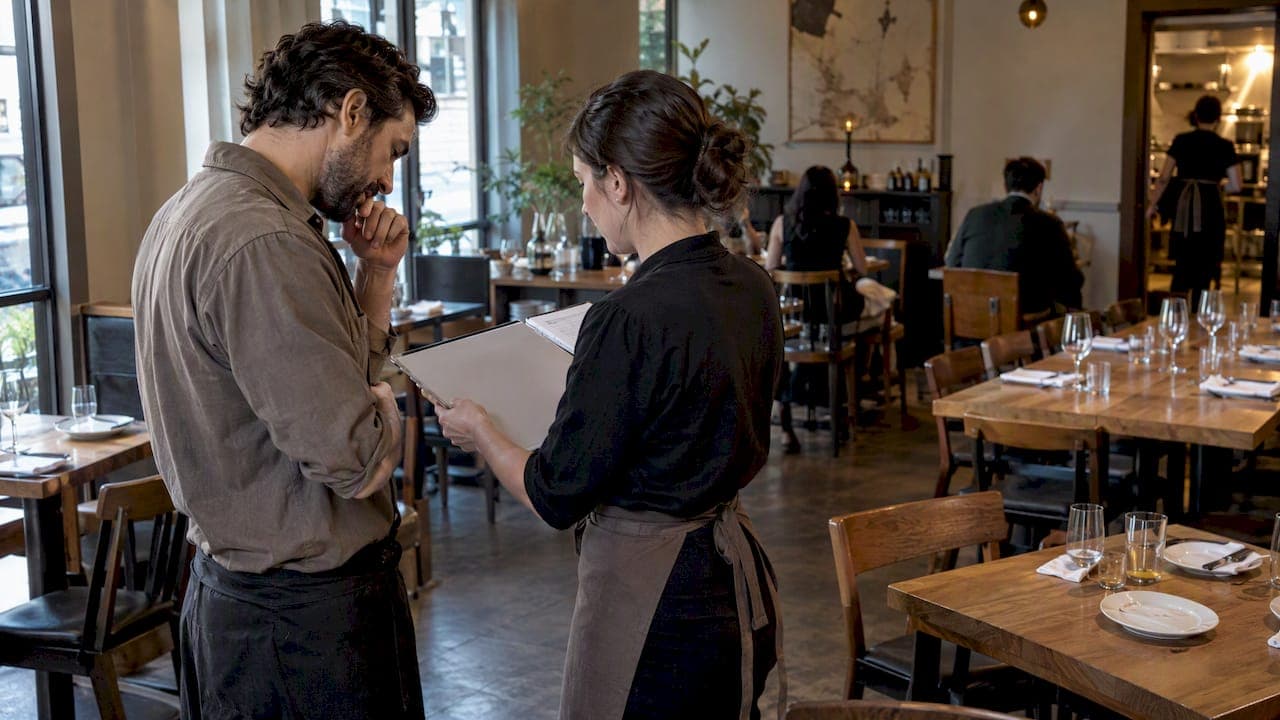
Reservations work best when demand is predictable, parties are large, and the meal is the occasion itself, think fine dining or a Saturday anniversary dinner. Waitlists suit high walk-in traffic and unpredictable crowds, especially where a bar or lounge can hold guests during the wait. Most full-service restaurants do better with a hybrid: reserve a portion of the floor and leave the rest open for walk-ins, protecting revenue while still catching spontaneous covers.
TL;DR:
- A hybrid model combining reservations and waitlists can optimize revenue by balancing booked seats and walk-in capacity, especially for restaurants with predictable demand.
- Remote waitlists with live updates and SMS notifications improve guest engagement, reduce crowding, and can keep guests waiting longer before leaving.
- Tightly managed booking windows, short hold times, and tracking key KPIs like covers per hour help fine-tune the system for better efficiency and guest satisfaction.
- A browser-based queue setup with QR codes and no app required can be implemented in under 30 minutes, making it easy to start and adapt quickly.
- The best approach depends on demand predictability, party size, and typical stay length, with testing recommended before settling into a fixed policy.
Table of Contents
- What Is a Waitlist and How Does It Change Service?
- What Is a Reservation System and What Trade-Offs Come With It?
- Comparing the Real Trade-Offs Between the Two Systems
- Matching Your Concept to the Right Policy
- Building a Hybrid Model That Protects Revenue
- The Day-to-Day Playbook: KPIs, Scripts, and Staffing
- Getting a No-App Waitlist Running Fast
- Handling Guest Data Responsibly
- Comparing the Tools Available Today
- What Guest Behavior Tells You About Preference
- Managing Surges Without Losing Guests
- What Actually Matters When You Choose
- A Simple Way to Run the Waitlist Half of Your Hybrid
- Sources
- FAQ
What Is a Waitlist and How Does It Change Service?
A waitlist is a walk-in-first system: guests arrive, add their name, and get seated as tables open up. The shift from a paper sign-in sheet to a web or SMS-based queue changes the experience on both sides of the host stand.
- Guests can join remotely from a phone browser before they arrive, no app download required.
- Live status updates let people wait in the bar, the car, or a nearby shop instead of hovering at the door.
- Remote join and real-time updates reduce crowding at the entrance and tend to improve guest retention through the wait.
A majority of guests say they are more likely to visit a restaurant that lets them join a waitlist remotely, and the average walk-off time for waitlisted guests runs close to 20 minutes. That 20-minute window is the practical deadline for keeping a guest engaged before they give up and eat somewhere else.
What Is a Reservation System and What Trade-Offs Come With It?
A reservation system lets guests book a table in advance for a specific time, which means the restaurant is committing a seat before the guest walks in. That advance booking workflow gives managers a clearer picture of expected covers, but it comes with real risk.
- Holding a table for a booked party means lost revenue if that guest never shows up.
- Confirmation texts, deposits for large parties, and modest overbooking rules are common ways to offset no-shows and late cancellations.
- Reservations set guest expectations around timing, which tends to shape a more predictable average dining duration than a walk-in-heavy room.
Reservation cancellation rates run at a noticeable but manageable level in recent industry reporting, and a growing share of bookings now come in same-day, which makes last-minute demand harder to plan around than it used to be.
Comparing the Real Trade-Offs Between the Two Systems
The core tension is simple: reservations trade guest certainty for no-show exposure, while waitlists trade revenue predictability for walk-off risk. Deciding between them means weighing a few measurable factors rather than a gut preference.
- Reservations protect planning and staffing but expose the restaurant to no-shows and last-minute cancellations.
- Waitlists capture walk-in demand but lose guests who get tired of waiting and leave before being seated.
- Average service length, party-size distribution, and how predictable your nightly demand is should drive the split between the two.
Research on service industry operations shows that a well-optimized hybrid or flexible seat allocation can increase total revenue by improving seat utilization, without needing a single additional customer walking through the door, according to a simulation-based study on waiting and revenue in hospitality operations. Cornell Hospitality's work on pooled-table reservation models points the same direction: pooling reservations by party size instead of tying them to specific tables, and applying a modest round-up factor for expected no-shows, tends to balance revenue against service level better than a rigid one-table-one-booking approach.
The practical cues to watch are demand predictability (weekday lunch versus Saturday night), the mix of two-tops versus large parties, and how long guests typically stay once seated. A room with long, leisurely dinners and big parties leans reservation-heavy. A room with fast turns and mixed walk-in traffic leans toward the waitlist.
Matching Your Concept to the Right Policy
Different restaurant concepts call for different defaults, and testing confirms the fit faster than guessing.
- Fine dining and special-occasion spots should favor reservations with tighter booking controls, deposits for larger parties, and confirmation messages sent a day ahead.
- High-turn fast casual and patio-driven concepts should favor waitlists with remote join, since walk-in volume is high and table turns are fast enough that holding seats in advance wastes capacity.
- Busy weekend nights versus slower weeknights often call for a hybrid tweak, such as reserving early-evening blocks on Friday and Saturday while running an open waitlist the rest of the week.
- Run a four-week test before locking in a policy: pick two comparable nights, apply a different reserved-to-walk-in split on each, and track covers per hour along with walk-off rate to see which split performs better for your specific room.
The goal isn't a permanent rule but a starting point you can adjust once you see how your actual guests behave.
Building a Hybrid Model That Protects Revenue
A hybrid model reserves a portion of the floor and leaves the rest open for walk-ins, which is essentially a revenue-protection strategy: the reserved block guarantees a baseline of covers, and the walk-in block acts as a safety net that fills gaps left by no-shows.
- A reasonable starting split is 60% reserved and 40% walk-in for concepts with predictable dinner demand, flipped toward 60% walk-in for casual, high-traffic rooms.
- Keep booking windows tight (same-day or next-day for smaller parties) and apply a short hold time, such as 15 minutes past the reservation slot, before releasing the table.
- Run the experiment Cornell's reservation research recommends: pick two nights with similar demand, apply a different seat split to each for four weeks, and compare covers per hour and revenue per cover.
Pro Tip: Track one KPI, covers per hour, as your test metric before adding more variables. A single clear signal is easier to act on than five competing ones.
The Day-to-Day Playbook: KPIs, Scripts, and Staffing
Once the policy is set, the daily work is about measurement and communication. A handful of numbers, checked nightly and reviewed weekly, tell you whether the system is working.
- Track average wait time, walk-off percentage, reservation no-show percentage, and table turn time every night.
- Send a reservation confirmation at booking, a reminder the day before, and a short SMS waitlist update when a guest's table is close.
- Adjust staffing and layout with the policy in mind: bar seating and a holding area absorb waitlist overflow, while a dedicated host station keeps reservation check-ins from colliding with walk-in intake.
Communicating live wait status matters more than it might seem. Analysis of nearly 100,000 restaurant visits found that letting guests leave the doorway while staying in the queue meaningfully cuts walk-off rates and helps preserve the chance of a return visit. Reminder messages timed a day ahead of a booking, targeted at guests who are statistically more likely to need the nudge, also improve reservation reliability according to Toast's reporting on full-service booking trends.
Pro Tip: A short, specific SMS ("Your table is ready, please check in at the host stand") outperforms a vague "you're almost up" message for reducing no-shows.
Getting a No-App Waitlist Running Fast
Ezseat's own setup reflects how quickly a browser-based queue can go live: print a QR code at the host stand, guests scan it and join from their phone browser, no app download involved. That QR code setup process typically takes under 30 minutes from account creation to a working queue.
- Guests join remotely or by scanning the QR code at the door, then get SMS updates as their table nears.
- A 48-hour offer rule, releasing a held slot if it isn't confirmed within that window, helps keep booked-event waitlists moving instead of sitting on stale entries.
- Templates for confirmation and reminder messages cut the setup time for a manager building this from scratch.
The same walkaway-reduction tactics apply whether the goal is filling a Tuesday lunch waitlist or managing a ticketed event's reserve list.
Handling Guest Data Responsibly
Waitlists and reservation systems both collect personal information: names, phone numbers, and sometimes payment details for deposits. That data carries legal obligations that vary by jurisdiction, and a restaurant operating across regions needs to know which rules apply where it does business.
At a minimum, guests should know what information is collected and why, and that data should be stored only as long as it serves a real operational purpose, such as sending a confirmation text or tracking repeat-visit history. Consent matters most around marketing messages: a guest who provides a phone number to get a table-ready alert has not automatically agreed to promotional texts later, and the two uses should be kept separate in how the system is configured.
Card details taken for no-show deposits deserve particular care. Storing payment information directly rather than through a compliant processor creates liability that most independent restaurants are not equipped to manage. Using a payment processor that handles PCI compliance removes that burden from the restaurant's own systems.
Staff training matters as much as the software. A host stand list left open on a public-facing screen, or a phone number read aloud within earshot of other guests, defeats the privacy protections built into the platform. The safest approach is treating guest contact information the same way a business would treat any other sensitive customer record: limited access, a clear retention policy, and a stated purpose for every piece of data collected. Restaurants operating in multiple countries should confirm their specific obligations with a legal advisor familiar with the applicable data protection rules in each market, since requirements differ meaningfully by region.

Comparing the Tools Available Today
The market for queue and booking software splits roughly into three categories. Full-featured reservation platforms handle advance booking, table management, and guest history, and suit restaurants where most business comes from planned visits. Dedicated waitlist tools focus on walk-in management: remote join, live status, and SMS paging, built for rooms where walk-ins dominate. A smaller category, including Ezseat, combines queue management with a browser-based join flow that skips app downloads entirely, which lowers the barrier for guests who might otherwise abandon a slow sign-up process.
The practical differences that matter for a manager choosing between them come down to a few questions: does the guest need to download an app, does the system require dedicated hardware at the host stand, and does the pricing scale with the size of the operation or stay flat regardless of volume. Ezseat's positioning is built around avoiding the first two costs: guests join through a web browser, and setup runs on a phone or tablet the restaurant already owns, with plans priced at $3.90 per month for Light billed monthly or $39.00 per year, and $14.90 per month for Pro billed monthly or $149.00 per year.
Whichever tool a restaurant chooses, the setup should support the policy already decided rather than dictate it. A tool built purely for reservations forces a waitlist workaround, and a tool built purely for walk-ins makes advance booking clunky. The hybrid approach outlined earlier works best when the software treats both queues as equally native, not one as an afterthought.
What Guest Behavior Tells You About Preference
Guest preference isn't static. Toast's research on restaurant waitlist behavior found that most guests now expect the option to join a line remotely rather than stand at a host stand, and that expectation shapes which restaurants they choose to visit on a busy night. A guest deciding between two similar restaurants nearby will often pick the one where they can see their position in line from their phone instead of guessing how long the wait actually is.
That said, guests judge the two systems by different standards. A reservation is judged on whether the table is ready at the promised time. A waitlist is judged on whether the quoted wait was honest and whether the guest could spend that time doing something other than standing at the door. Longer waits increase the chance a guest reneges and leaves, shortens how long they end up staying once seated, and can push back how soon they return, according to large-sample analysis of restaurant wait behavior. Accurate wait estimates and live updates matter more to guest satisfaction than the length of the wait itself.
Segment matters too: families and larger groups tend to book ahead more reliably than solo diners or couples, which is part of why reminder messages targeted at likely no-show segments improve reservation reliability without adding friction for everyone else.
Managing Surges Without Losing Guests
Unexpected surges, a nearby event letting out, a weather shift that sends outdoor diners inside, a local team winning a game, test any seating system harder than a normal Saturday. The fix is less about redesigning the system and more about having a pressure valve ready before it's needed.
For reservation-heavy rooms, that valve is a short overbooking buffer and a clear rule for how long a held table waits before it's released to the next party. For waitlist-heavy rooms, it's the ability to let guests wait somewhere other than the doorway, whether that's the bar, a nearby coffee shop, or their car, while staying updated on their position. A service recovery study on failed reservations and guest expectations found that proactive communication after a delay or a failed booking lowers the risk of a guest leaving a negative public review, which matters more during a surge when frustration compounds faster.

The hybrid structure helps here by design: if a surge fills the reserved block early, the walk-in portion absorbs the overflow instead of turning away every guest who didn't book ahead. Keeping a small reserve of tables unassigned until the last 30 minutes before peak hours gives a host the flexibility to seat whichever line, reservation or waitlist, is moving too slowly. Approaches to turning waitlist interest into confirmed bookings during high-demand periods can also convert some of that walk-in surge into next-time reservations, smoothing out future peaks.
What Actually Matters When You Choose
The debate over waitlist versus reservations gets treated like a permanent identity choice, when it's really an operational setting that should shift with the season, the day of the week, and even the weather. Most managers pick one system and defend it long after the data stops supporting the choice. Test a single KPI, covers per hour or walk-off percentage, for four weeks before deciding anything is settled.
Neither system is free of trade-offs, and the right mix depends on signals specific to your room, not on what a competitor down the street is doing. Start with the guides and research cited here, then let your own four-week numbers make the final call.
— Ezseat
A Simple Way to Run the Waitlist Half of Your Hybrid
Whatever split you land on between reserved tables and walk-in seating, the waitlist side needs to be simple enough that guests actually use it. The system runs entirely through a web browser, so guests join by scanning a QR code at the host stand or clicking a link, no app download standing between them and a spot in line.
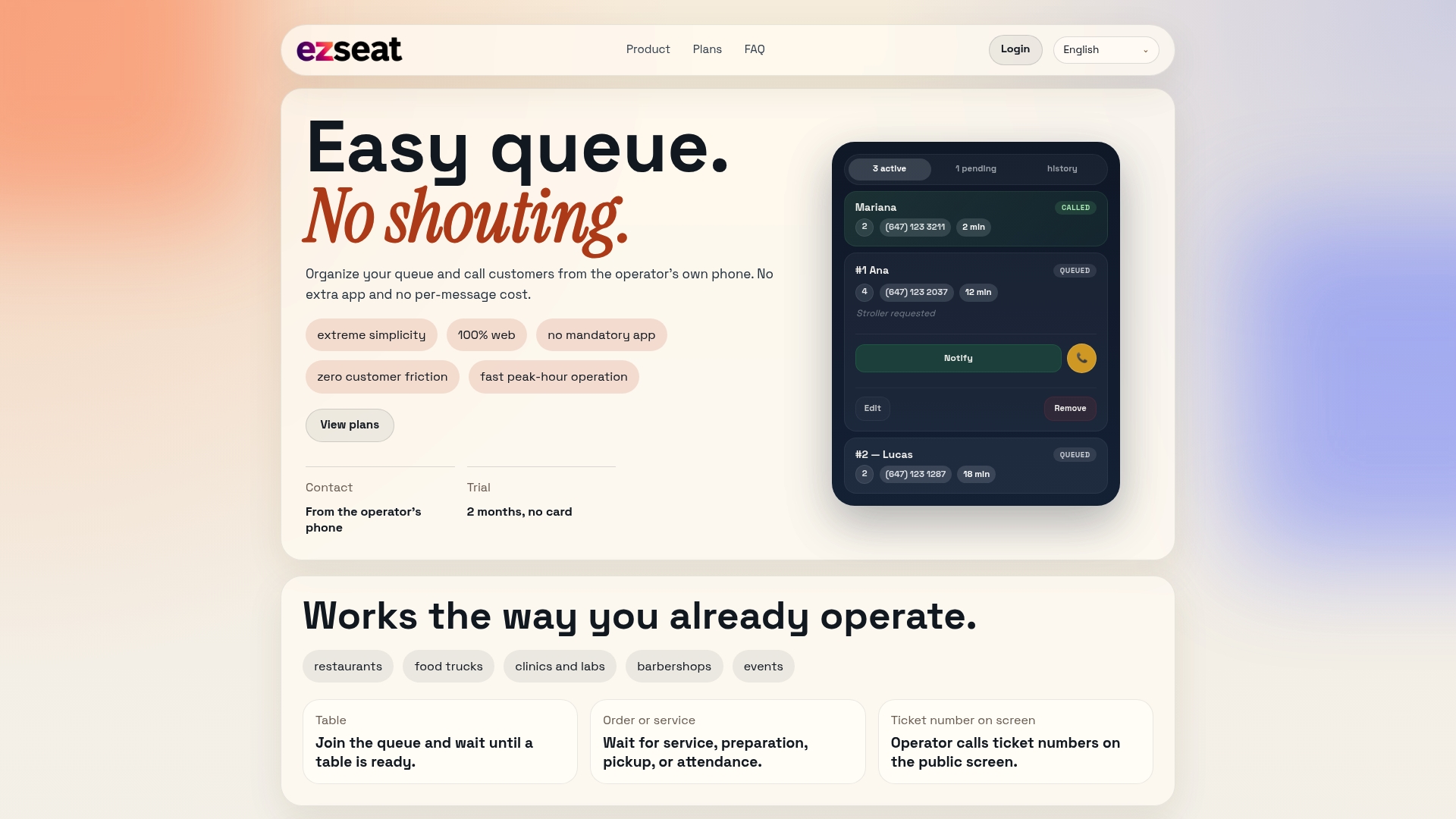
That matters most during the exact surges and Saturday-night rushes this article has been talking about: a guest who has to download something before joining a queue is a guest who often just leaves. SMS updates keep them informed wherever they're waiting, and setup takes under 30 minutes on a phone or tablet already available at the host stand. A free two-month trial is available before choosing between the Light and Pro plans at Ezseat, so testing the waitlist half of a hybrid model costs nothing to start.
Sources
- Make the most of 2026 restaurant reservation & waitlist data
- System-wide impact of waiting on customer behavior and revenue (service industry study)
- Cornell Hospitality tool: optimizing reservations and table mix
FAQ
How likely is it to get accepted after being waitlisted?
For restaurant waitlists, "acceptance" isn't a fixed odds question since tables typically open on a rolling basis as parties finish and the queue clears in order. Guests who stay engaged with live status updates and remain reachable by SMS are more likely to get seated before they lose patience and leave, since the average walk-off time hovers around 20 minutes.
What is the difference between a reserve list and a waiting list?
A reservation is a table booked in advance for a specific time, while a waitlist is a queue for walk-in guests without a prior booking. Reservations trade guest certainty for no-show risk, and waitlists trade revenue predictability for the chance a guest gives up and leaves before being seated.
Is it better to get waitlisted or rejected?
Being waitlisted keeps the door open since tables free up throughout service and a spot in line can still lead to being seated, while an outright turn-away ends the chance entirely. A restaurant with an accurate, honest wait estimate and live status updates gives waitlisted guests a real reason to stay rather than walk.
How long can you be waitlisted for?
Wait length depends entirely on how fast tables turn over and how many parties are ahead in line, so there's no fixed cap. Restaurants that communicate live status tend to keep guests waiting longer without losing them, since research on nearly 100,000 visits found that letting guests leave the doorway while staying in queue reduces walk-off rates.