
The fastest, cheapest fix for most small restaurants is a browser-first virtual waitlist paired with low-cost operational tactics: better signage, honest wait estimates, and a queue buster or two. A no-app setup like this can go live in about 15 to 30 minutes, which means you can start cutting walkaways tonight instead of scheduling a software rollout for next quarter.
TL;DR:
- Small restaurants under 30 seats benefit most from QR or SMS virtual waitlists due to low setup costs and no hardware requirements.
- The recommended system should be deployable within 15 to 30 minutes and focus on SMS alerts, party size handling, and simple guest check-in.
- Tracking metrics such as average wait time, walkaway rate, and table turn times weekly helps determine if the queue system effectively reduces wait-related issues.
- Quick tactics like posting honest wait times, offering pre-orders, and staggering seatings can improve guest experience without new software.
- Operational rules include setting party size limits, managing overbooking buffers, and using simple SMS notifications to reduce walkaways and improve efficiency.
Table of Contents
- What Are the Main Types of Restaurant Queue Systems?
- How Do You Choose the Right Queue System for Your Restaurant?
- What Quick Tactics Cut Wait Times This Week?
- How Do You Set Up a No-App Virtual Waitlist Fast?
- Which Metrics Actually Tell You the Queue Is Working?
- What a Queue Practitioner Wishes More Owners Knew
- Get a Small Restaurant Queue Running Today With Ezseat
- Sources
What Are the Main Types of Restaurant Queue Systems?
Every queue system falls into one of five buckets, and each one trades cost against control.
- Manual host list. A notebook or clipboard. Zero cost, zero setup, but it depends entirely on staff memory and produces no data.
- Pagers or buzzers. Familiar to guests, reduces crowding at the door, but hardware costs and battery replacement add up, and a lost buzzer is a recurring headache.
- QR or short URL check-in with SMS. Guests scan a code or visit a link, enter their name and party size, and get a text when their table is ready. Low cost, no hardware to lose, and it lets people wait in their car or next door.
- Reservation plus waitlist hybrids. Combines booked tables with a walk-in list. Useful once you have steady demand, but usually requires a paid platform and staff comfortable managing two systems at once.
- Third-party marketplace bookings. Handles both discovery and seating through one app. It brings in new diners but usually charges per cover or takes a booking fee, which eats into thin restaurant margins.
For a restaurant under 30 seats, the QR/SMS approach almost always wins. It needs no hardware investment, no dedicated staff member, and no long onboarding. Food trucks and pop-ups do best with the same browser-first model since there's no counter, no host stand, and often no fixed address to anchor a paper list.
How Do You Choose the Right Queue System for Your Restaurant?
Pick based on six factors, in this order of importance for a small operation: setup time, monthly cost, staff overhead, how well it handles varying party sizes, notification reliability, and whether it gives you any usable data afterward.
- Setup time. If it takes more than an afternoon to deploy, it's the wrong system for a place already running lean on staff hours.
- Monthly cost versus covers. A $50 to $150 monthly tool has to justify itself in reduced walkaways, not just convenience.
- Staff handling. Can one host run it during a Friday rush without a second person managing the tech?
- Party-size flexibility. Does it let you group tables or hold spots for six-tops without manual workarounds?
- Notification reliability. SMS beats app push notifications because it doesn't require the guest to install anything first.
- Analytics. Even a basic report on average wait and walkaway rate beats guessing.
Must-haves: browser-based guest entry, SMS alerts, and party-size fields. Nice-to-haves: POS integration, multi-location dashboards, custom branding.
Pro Tip: Trial a browser-first system for two weekends before signing anything monthly. If it survives a Friday rush without a host needing help, it's ready for daily use.
What Quick Tactics Cut Wait Times This Week?
You don't need new software to shrink complaints about waiting. Small, cheap interventions change how guests experience the same 20 minutes.
- Deploy a queue buster. A small water station, bread basket, or even a printed cocktail menu at the door makes waiting feel shorter without cutting into food cost. Coverage on line-sitting and viral queue culture shows guests will tolerate real waits when there's something to do or see while standing there.
- Post honest wait times, not optimistic ones. A sign that says "currently quoting 25 to 35 minutes" beats a host guessing "15 minutes" and being wrong twice in a row. Include your name for the list and a QR code so people don't have to ask.
- Add a pre-order or express lane. Letting waiting guests order a starter or drink from a QR menu keeps them engaged and speeds up table turn once they sit.
- Stagger seating instead of batch-seating. Sitting four tables at once creates a kitchen bottleneck fifteen minutes later, which creates the next line. Spread seatings by five-minute intervals when you can.
- This week's experiment: switch from a paper list to text notifications for one weekend and track how many people leave before their table is ready. That single number tells you more than any general industry benchmark.
How Do You Set Up a No-App Virtual Waitlist Fast?
A browser-first waitlist skips the biggest friction point in queue management: asking a hungry, impatient guest to download an app. They scan a QR code or visit a short URL, type their name, party size, and phone number, and that's it. No account, no app store, no wait for a download over spotty restaurant Wi-Fi.
The setup itself is short. Generate your QR code and short URL, print a table-tent or door sign with clear instructions, load a simple SMS notification template ("Your table is ready, please return to the host stand"), and walk your host through adding a party and quoting a wait. That's roughly the full checklist, and Ezseat documents this taking about 15 to 30 minutes start to finish.
Restaurants using SMS notifications instead of a purely physical line see fewer walkaways, since guests can wait in their car, next door, or across the street instead of standing outside your window.
A few operational rules matter more than people expect:
- Set a maximum party size the system will auto-quote, and flag anything larger for manual host review.
- Decide your overbooking buffer up front. Quoting wait times too optimistically creates the exact frustration you're trying to fix.
- A public display or small kiosk is optional. Most small restaurants run fine with just a host phone and the QR check-in flow.
- If you run a POS system, a light integration prevents double-booking, but a standalone waitlist works fine without one.
Which Metrics Actually Tell You the Queue Is Working?
Track five numbers, and track them weekly, not quarterly: average wait time, walkaway rate, table turn time, no-show rate, and peak-hour load. A spreadsheet and a stopwatch cover the basics; built-in queue analytics save you the manual tally once volume picks up.
Run a simple 30-day cycle:
- Week 1: Measure baseline. Log every party's wait time and note who leaves before being seated.
- Week 2: Introduce one change, like SMS notifications instead of shouted names.
- Weeks 3 to 4: Compare walkaway rate and average wait against your baseline, then keep or drop the change.
Restaurants that switch to reliable text alerts commonly see walkaways drop meaningfully simply because guests aren't standing in a doorway wondering if they've been forgotten.
What a Queue Practitioner Wishes More Owners Knew
A visible line outside your door isn't automatically bad. Some restaurants lean into it deliberately, and reporting on viral food queues shows a crowd can work as free marketing. But for most small operators without a viral moment behind them, an unmanaged line just means lost customers and stressed staff. Decide which one you're running, on purpose, not by accident.
— Ezseat
Get a Small Restaurant Queue Running Today With Ezseat
A browser-first waitlist can be live the same day, not the same quarter. Guests join from their phone's browser, no app download required, and get an SMS the moment their table opens up. You manage the whole line from your own phone or a tablet at the host stand, with support for multiple queues if you run more than one location or a busy weekend pop-up alongside your main dining room.
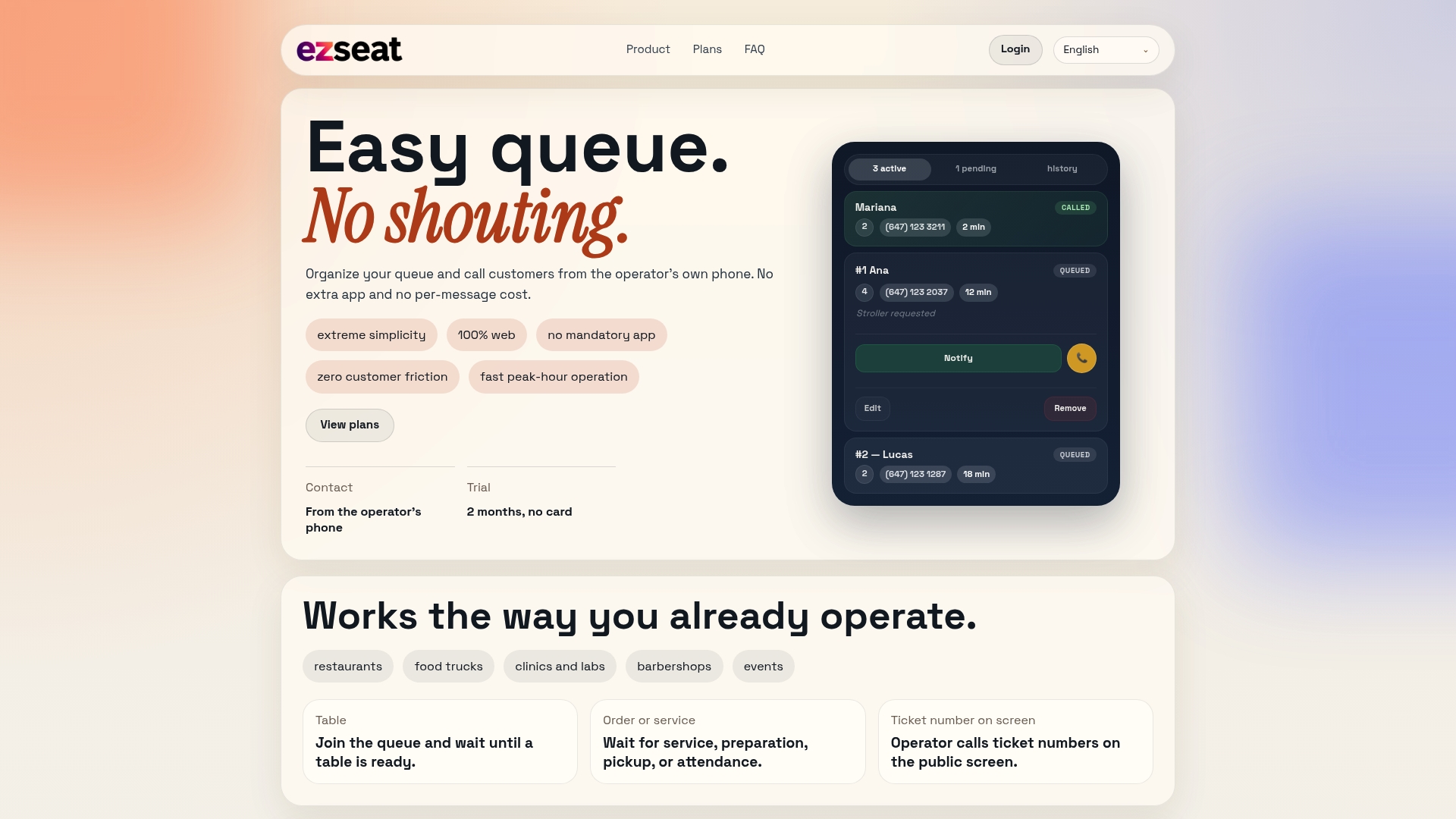
It fits a tight counter-service café just as well as a food truck working a weekend market, and it scales up if you add a second location without forcing you onto a different system. Setup runs about 15 to 30 minutes, covering your QR code, signage, and notification template in one sitting. Start your free trial at Ezseat and have your first virtual waitlist running before your next dinner rush.
Sources
- The Latest Gig Economy Hustle? Restaurant Line Sitting. | Eater
- When Will Chicagoans Lose Their Appetite For Waiting In Line? | Block Club Chicago