
Most queue management software costs somewhere between free and hundreds of dollars a month, but the number that actually matters is what you spend once SMS fees, per-location charges, and hardware get added in. For most single or multi-location businesses, a realistic all-in figure is generally within a moderate monthly range. If you want predictable pricing without a stack of surprise line items, Seven's affordable plans are a useful example of clear pricing tiers worth trialing first. It runs entirely through a browser, skips the app-install friction customers hate, and offers a two-month free trial before you commit to a Light or Pro plan. The rest of this guide breaks down exactly where the hidden costs hide and how to compare vendors without getting burned.
Key Takeaways
Predictable all-in pricing beats a low headline number because SMS fees, per-location charges, and hardware costs routinely add $50 to $150 a month on top of the advertised subscription rate.
| Point | Details |
|---|---|
| Headline vs. all-in price | Advertised plans run free to $500+/month, but realistic all-in spend for most businesses is $150–$250/month. |
| SMS is the biggest hidden cost | Estimate it by multiplying daily visitors by messages per visitor before comparing vendor quotes. |
| Match tier to visitor volume | Single-location businesses fit entry tiers; multi-location or high-volume operations need mid-tier or enterprise plans. |
| Ask about billing model upfront | Confirm whether pricing is per user, device, visitor, or location before signing a contract. |
| Ezseat offers predictable trial pricing | A two-month free trial and browser-based access help you measure real costs before committing to a Light or Pro plan. |
Table of Contents
- What Does Queue Software Pricing Actually Look Like?
- What Actually Drives the Total Cost?
- Which Plan Fits Your Business Size?
- How Do You Compare Vendors Without Getting Surprised?
- Why Predictable All-In Pricing Beats a Low Headline Number
- Try Ezseat Before You Commit to Anything
- Frequently Asked Questions About Queue Software Pricing
- Sources
What Does Queue Software Pricing Actually Look Like?
Pricing tiers follow a fairly predictable ladder across the industry, and knowing the ladder helps you spot when a vendor's quote is out of line.
- Free: Limited to one queue, one device, and basic ticketing. Fine for testing, not for daily operations.
- Entry ($30–$100/month): Single location, a handful of devices, standard SMS allotment. RightQ's published tiers start around $30 a month for exactly this kind of setup.
- Mid ($150–$350/month): Multi-device, more generous visitor limits, reporting dashboards, sometimes multi-location support.
- Enterprise ($500+/month): Custom SLAs, API access, dedicated support, and integration with existing POS or CRM systems.
The catch is that the sticker price rarely tells the whole story. Vendors commonly publish tiered pricing pages that look clean until you notice the fine print excluding SMS and hardware. Once you factor those in, a plan advertised near $99 per month often results in significantly higher real spend, creating a common source of budget surprises in this category.
What Actually Drives the Total Cost?
The subscription fee is just the entry ticket. Several variables stack on top of it, and any one of them can swing your monthly bill by $50 to $200.
- SMS and voice notifications: Billed per message or per bundle, and this is usually the biggest hidden line item.
- Per-visitor or per-ticket fees: Some platforms cap free visitors per month and charge overage rates.
- Per-location fees: A second or third location often means a second or third subscription, not a shared seat.
- Per-user or per-device limits: Adding staff tablets or reception kiosks can bump you to the next tier.
- Integration and API costs: Connecting to a CRM or payment processor sometimes carries its own fee.
- Hardware: Kiosks, printers, and digital signage are frequently sold separately from the software subscription, and a display screen setup alone can run into real money if you're not budgeting for it.
- Onboarding and support: Enterprise tiers often carry a one-time implementation fee on top of the monthly rate.
Billing cadence matters too. Annual contracts typically shave 10-20% off the monthly rate, but they lock you in, which cuts against you if your visitor volume shrinks. Monthly billing costs more per month but keeps you flexible if you're still figuring out your actual usage.
Pro Tip: To estimate SMS spend before you sign anything, multiply your average daily visitors by the number of messages each one triggers (join confirmation, "you're up next," and any reminder), then multiply by your expected messaging rate. A 150-visitor-a-day restaurant sending two texts per visitor adds up fast, even at a fraction of a cent per message.

Which Plan Fits Your Business Size?
The right tier depends less on your industry and more on your visitor volume and location count.
- Single-location small business (cafes, food trucks, barbershops): Entry-tier pricing, roughly $30–$100 a month all-in with light SMS use. One device, one queue, done.
- Multi-location retail or franchise: Mid-tier, typically $150–$350 a month once you add a second and third location and higher SMS volume.
- High-volume clinics or events: Mid-to-enterprise, often $250–$500+ a month once you account for clinic-specific check-in flows and heavier notification traffic during peak hours.
- Enterprise with custom integrations: $500+ a month, plus a one-time implementation fee for API and CRM work.
A simple decision rule: if you're running one location and under 100 visitors a day, start at entry-tier and upgrade only when you hit a hard limit. If you're managing multiple sites or need SLA guarantees, skip straight to mid-tier or enterprise conversations, since entry plans almost never scale cleanly across locations.
How Do You Compare Vendors Without Getting Surprised?
Every vendor prices things a little differently, which makes side-by-side comparison harder than it should be. A short checklist fixes that.
Compare these before you sign anything: billing model (per user, device, or visitor), SMS provider and per-message rate, hard limits on queues or devices, contract length and cancellation terms, integration fees, trial length and what features it unlocks, SLA and uptime commitments, and migration support.
Then ask the vendor directly:
- "What's included in this monthly price, and what gets billed separately?"
- "What's your SMS rate per message, and is there a monthly cap?"
- "Does this price cover one location, or does each location need its own subscription?"
- "What happens to my data and setup if I cancel after month three?"
- "Is onboarding included, or is that a separate line item?"
To get an apples-to-apples number, take the base subscription, add your estimated SMS cost from the formula above, add any per-location or per-device overage, and add a prorated onboarding fee if one applies. That total, not the homepage price, is the number to compare across vendors.
Why Predictable All-In Pricing Beats a Low Headline Number
Ezseat runs entirely in the browser, so customers join a queue from their phone without downloading anything. Staff manage the flow from a phone or tablet without extra hardware to configure. The two-month free trial gives you time to measure real visitor volume before committing to a Light or Pro plan, which matters more than any headline price, since your actual usage is what determines your real bill.
- Browser-based entry means no app-install friction and no lost customers at the sign-up step.
- Multi-device support lets staff manage queues from whatever phone or tablet is on hand.
- Transparent tier structure means fewer surprise add-ons once you're past the trial period.
Pro Tip: When you talk to any vendor about onboarding, ask them to scope it down to just data migration and staff training. Full-service onboarding packages often bundle in consulting hours you don't need for a straightforward queue setup.
How Long Does Setup and Switching Actually Take?
Timeline depends almost entirely on whether you need new hardware.
- Self-serve, browser-only setup: Under a week. Create queues, share your link, go live.
- Kiosk or display hardware installs: One to four weeks, factoring in shipping and a display screen configuration.
- Enterprise integrations (CRM, POS, custom SLAs): Four to twelve weeks or more, depending on how many systems need to talk to each other.
Migrating from another system means exporting your existing customer and queue data, training staff on the new interface, and ideally running both systems in parallel for a few days before fully switching over.
Is the Cheapest Plan Actually the Cheapest Choice?
The lowest headline price rarely stays the lowest once SMS, per-location fees, and support gaps get factored in. I'd rather see a manager pay a little more upfront for a plan with fewer moving parts and support included, because the admin hours saved chasing invoice line items are worth more than the $20 a month you saved on paper.

Try Ezseat Before You Commit to Anything
If you've been comparing spreadsheets full of per-message rates and per-location add-ons, the simpler route is to just test the software with real customers first. Ezseat offers a two-month free trial with no app download required for your customers and no hardware to configure before you start.
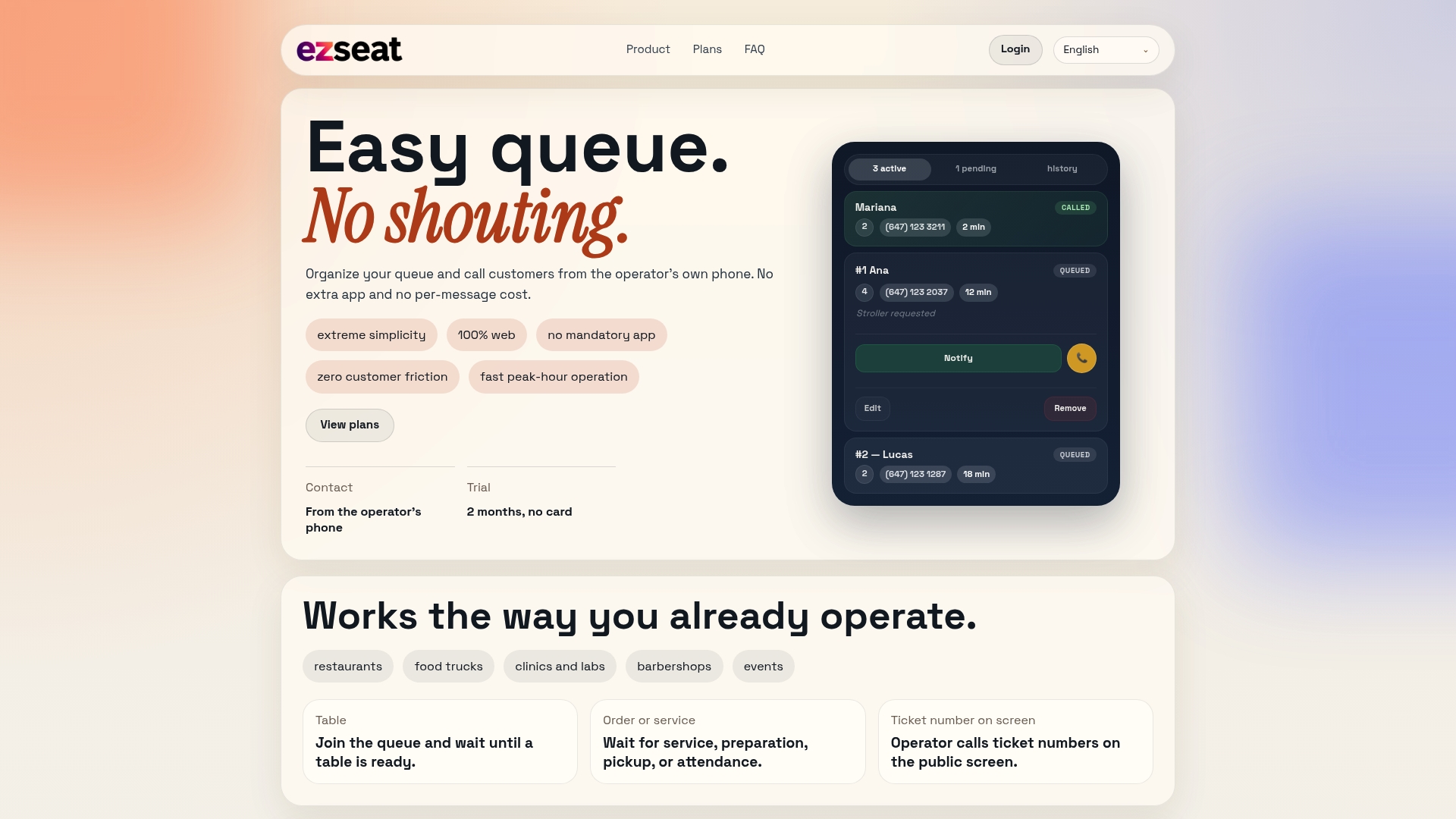
Before you book a demo, have three numbers ready: your average daily visitor count, how many locations you're running, and roughly how many messages you expect to send per customer (join confirmation plus any "you're up next" alerts). With those in hand, a 15 to 30-minute call gets you a real quote instead of a guess. You can also book a pricing conversation directly if you'd rather skip the trial and go straight to a tailored estimate.
A few things worth knowing going in: the trial runs two full months, everything works through a standard web browser, and Ezseat's team can walk you through estimating your own SMS costs based on your visitor volume before you pay anything.

Frequently Asked Questions About Queue Software Pricing
Does queue software have hidden fees? Yes, almost always. SMS notifications, per-location charges, and hardware like kiosks or printers are typically billed separately from the base subscription, even when the marketing page doesn't say so clearly.
Is there a free option, and is it actually usable? Free tiers exist but usually cap you at one device and one queue, which works for testing but rarely covers a real operating day. Treat free tiers as trials, not long-term solutions.
How much should I budget for SMS costs? It depends on your visitor volume and message frequency per customer, but for a mid-volume business sending one or two texts per visitor, SMS can add a meaningful chunk to your monthly bill on top of the base subscription.
Is it hard to switch queue software providers? Simple browser-based setups can go live in under a week. Anything involving kiosk hardware or CRM integrations takes longer, often one to twelve weeks depending on complexity.
Should I choose based on price or features? Start with the features you actually need (multi-location support, SMS volume, integrations), then compare all-in pricing across vendors that meet those requirements. Picking on price alone tends to backfire once hidden fees show up.
Sources
- Calendly booking page — masudfromqueue (30min)