
The fastest way to fix a barbershop waitlist is to run it through a browser-based system that lets customers join by scanning a QR code or tapping a public link, then get notified by text when their chair opens up. No app downloads, no shouted names across the shop. Pair that with staff controls for marking customers notified, skipped, or seated, and you cut no-shows while filling last-minute cancellations that would otherwise sit empty. Test it during one busy Saturday shift before rolling it out full time.
TL;DR:
- Using a browser-based QR code or public link system ensures walk-ins can join the waitlist instantly without app downloads, reducing friction.
- Reliable SMS and web notifications, combined with real-time status updates and barber-specific queues, are critical to maintaining an accurate and efficient waitlist.
- A staged rollout over 30 to 90 days, including testing during slow days and adjusting notification timing, helps prevent disruptions during busy shifts.
- Tracking key metrics such as no-show rate, cancellation fill rate, chair utilization, and wait time weekly proves the system’s effectiveness and shows revenue recovery from cancellations.
- Ezseat offers a quick setup with a QR code, SMS notifications, staff controls, and multi-queue support, ideal for shops combining walk-in and appointment traffic.
Table of Contents
- How Barbershop Waitlist Management Actually Works Day to Day
- What Features Actually Matter in Barbershop Management Software
- How Do You Set Up a Barbershop Waitlist System?
- Running the Waitlist During a Real Shift
- What Metrics Actually Prove the Waitlist Is Working?
- What Does This Look Like With Ezseat in a Real Barbershop?
- What Does a Waitlist System Cost for a Small Shop?
- How Long Does It Take to Get a Digital Waitlist Running?
- Does a Digital Waitlist Actually Improve the Customer Experience?
- What Privacy Rules Apply to Barbershop Waitlist Data?
- A Barber-Manager's Quick Take on Running the Waitlist
- How Ezseat Fits Into Your Waitlist Setup
- Sources
How Barbershop Waitlist Management Actually Works Day to Day
Most shops land on one of five approaches, and each has a real cost attached to it.
A paper or phone-based list still works for a one-chair shop with steady regulars, but it falls apart fast once you add a second barber or a rush of walk-ins. Someone has to babysit the clipboard.
A QR code or public join link lets a walk-in add themselves to the queue from the sidewalk without installing anything. This matters more than most owners assume: browser-based, no-download entry consistently outperforms app-based check-in because walk-ins simply won't download an app for a fifteen-minute haircut.
A kiosk or tablet at the front desk gives you on-site control when you want a staff member physically confirming each check-in, useful in higher-volume shops where walk-ins outnumber bookings.
Phone and SMS intake works well for prioritizing regulars or VIP clients who call ahead, though it needs a clear rule for where those callers land in the queue relative to walk-ins.
The strongest setups run a hybrid model: one shared schedule where appointments and walk-ins compete for the same open chairs, instead of two separate systems that constantly conflict.
- Paper lists: fine for single-chair shops, unmanageable past two barbers
- QR/public link: lowest friction for walk-ins, works from any phone browser
- Kiosk/tablet: best when you want staff verifying each entry
- Phone/SMS: good for VIP handling, needs a clear priority rule
- Hybrid scheduling: the only model that actually eliminates double-booked chairs
What Features Actually Matter in Barbershop Management Software
Skip the feature checklists that read like software brochures. Here's what actually separates a system that works from one your staff will abandon within a month.
Notification reliability comes first. If texts arrive late or land in a spam filter, the whole system collapses back into shouted names. User reviews of waitlist-capable scheduling tools consistently rate notification reliability and ease of use as the top factors separating systems people keep using from ones they abandon.
No-download public entry through a QR code or shared link removes the single biggest point of walk-in friction.
Status tracking needs to show notified, in-progress, and skipped in real time, so any staff member can glance at a screen and know exactly where every customer stands.
Multi-queue or barber-specific assignment matters if customers request a specific stylist; the system needs to separate "first available" from "waiting on Marcus."
Calendar sync stops a barber from double-booking a walk-in into a slot already held for an appointment.
Basic built-in analytics, covering no-show rate, fill rate, and average wait, tells you whether the system is actually working or just feels busier.
- Reliable SMS/web notifications with fallback channels
- QR code or public link, no app required
- Real-time status tracking (notified, in-progress, skipped)
- Barber-specific queues alongside first-available logic
- Calendar sync to prevent double-booking
- Basic analytics on no-shows, fill rate, and wait time
Pro Tip: Before signing up for anything, ask a vendor to show you the notification screen a customer actually sees. If it looks confusing to you in a demo, it will confuse a customer standing on a sidewalk waiting for their phone to buzz.
How Do You Set Up a Barbershop Waitlist System?
Rolling out a new system works better as a staged plan than an overnight switch. Here's a 30 to 90 day sequence that keeps the shop running while you test.
- Pick a browser-first platform and set realistic service durations for each cut type, since accurate timing is what makes wait estimates trustworthy.
- Generate your QR code and public join link, then print signage for the entry door and each waiting chair.
- Set notification timing, usually a text when a customer moves to the top three in queue, plus a second alert when their chair is ready.
- Train staff on status updates: who marks a customer notified, who marks them skipped, and how to switch someone from a requested barber to first-available if they've waited past a set threshold.
- Run a dry test during a slower weekday shift before trusting it on a Saturday rush.
- Launch live during a predictably busy period, since a short trial on a high-traffic day is the fastest way to validate the workflow without risking a full week of chaos.
- Collect staff and customer feedback for the first two weeks and adjust notification timing accordingly.
- Build a cancellation-recovery rule, such as auto-texting the next three people in queue the moment a slot opens, so cancellations get refilled within minutes instead of sitting empty.
Running the Waitlist During a Real Shift
The system is only as good as the habits your staff builds around it. Status hygiene is the make-or-break detail: every customer needs to be marked notified, en route, skipped, or completed the moment their status changes, or the queue display starts lying to everyone watching it.
Set a clear rule for when a customer moves to first-available versus when a barber-specific request gets honored. A common threshold: if the requested barber is running significantly behind and the customer hasn't confirmed they'll wait, offer first-available automatically.
Keep SMS scripts short. "Your chair's ready, come on in" works better than a paragraph. In person, a simple "You're next up, give us two minutes" keeps the line moving without a staff member stopping mid-cut to explain the queue.
For a customer who misses a notification, give a five-minute grace window before moving to the next name. Kiosk mode earns its keep during a rush, letting one staff member manage check-ins at the front while everyone else keeps cutting.
- Mark every status change immediately, don't batch updates
- Set a clear time threshold for switching to first-available
- Keep SMS and in-person prompts under one sentence
- Build a five-minute grace window for missed notifications
Pro Tip: Assign one person per shift to own the queue screen. When status updates get treated as "everyone's job," they become nobody's job, and that's when the system quietly breaks down.
What Metrics Actually Prove the Waitlist Is Working?
Four numbers tell you almost everything: no-show rate, cancellation fill rate, chair utilization, and average wait time. Track them weekly, not monthly, since barbershop traffic swings enough by season that monthly averages hide real problems.
The ROI math is simple. Multiply your average ticket price by the number of previously-lost cancellation slots your system now refills each week. A shop that recovers even three $35 slots a week through automatic refill notifications adds real weekly revenue that a paper list would have left empty. Automated reminders and confirmation texts are a major reason some shops report no-show rates far below the walk-in-heavy industry norm.
| Metric | What to watch for | Action if it stalls |
|---|---|---|
| No-show rate | Trending down after reminders go live | Shorten SMS timing or add a confirmation step |
| Cancellation fill rate | Rising week over week | Auto-notify more people per opening |
| Chair utilization | Staying above target during peak hours | Adjust service duration estimates |
| Average wait time | Holding steady or dropping | Rebalance barber-specific queue thresholds |
What Does This Look Like With Ezseat in a Real Barbershop?
Ezseat runs the browser-first model directly: customers join by scanning a QR code or tapping a public link from their own phone, no download required. Staff manage the entire queue from a phone or tablet, updating statuses and sending notifications without ever raising their voice across the shop.
That structure holds up during the exact moment it matters most, a Saturday rush where walk-ins and appointments are competing for the same three chairs. Plans let a single-chair shop start small and add queues as additional barbers come on board.
- Browser-based join, no app for customers to install
- Staff controls run from any phone or tablet
- Multi-queue setup scales as you add barbers or chairs
- Setup guides and case studies live on the Ezseat blog for shops planning a rollout
What Does a Waitlist System Cost for a Small Shop?
Pricing for waitlist and queue tools generally follows a subscription model, billed monthly or annually, with tiers scaling by chair count, queue volume, or notification usage rather than a flat per-shop fee. Smaller shops pay for lighter tiers; larger operations with multiple queues and SMS volume need higher tiers to stay reliable during peak hours.
Many vendors offer a trial period before charging anything, which matters because a live Saturday test tells you more about fit than a sales demo ever will. Marketplace comparisons of barbershop-specific software consistently flag the same core features owners should prioritize regardless of price tier: notifications, QR entry, and hybrid walk-in support.
Watch for a few cost traps beyond the sticker price. Per-SMS fees can add up fast in a high-volume shop that texts every customer twice per visit. Some platforms charge extra for multi-queue setups once the number of barbers increases, which matters if you're planning to grow. And a few vendors lock basic analytics, like no-show and fill rate tracking, behind a higher tier, even though those numbers are exactly what you need to prove the system is paying for itself.
Compare the free trial length against how long it actually takes to run one full busy weekend plus a slow weekday, since a two-day trial won't show you anything useful about cancellation-fill performance.

How Long Does It Take to Get a Digital Waitlist Running?
A realistic barbershop rollout takes two to four weeks from decision to full confidence, not the single afternoon a sales page might imply.
Week one covers platform setup: service durations, notification templates, and generating your QR code and public link. Week two is signage and staff training, printing QR codes for the door and each chair, and walking every barber through status updates before customers ever see the system live.
Week three is the dry run, ideally during a slower weekday shift where mistakes cost you nothing. Week four is the live test during a genuinely busy period, followed by two weeks of daily tweaks to notification timing and status rules based on what staff actually run into.

By the 90-day mark, most shops have their cancellation-recovery rules dialed in and their metrics stable enough to trust. Shops that skip the dry run and go straight to a Saturday launch tend to spend that same four weeks fixing avoidable confusion instead of refining a system that already works.
Does a Digital Waitlist Actually Improve the Customer Experience?
The improvement is concrete, not just a feeling. Customers stop hovering near the front desk asking "how much longer," because they can see their position from their own phone or a public display. Clear on-site displays showing live queue numbers measurably reduce front-desk interruptions and cut down on the guessing game that makes waiting feel longer than it is.
Walk-ins get treated the same as appointment customers instead of feeling like second-class traffic competing for leftover chair time. That single change, giving a walk-in a real place in line instead of a vague "we'll fit you in," shifts how a shop feels to a first-time customer deciding whether to come back.
The flip side matters too: a digital system that's poorly run, with stale statuses and missed notifications, can feel worse than a paper list, because customers expect a tech-driven system to be more accurate, not less. Status hygiene isn't a nice detail, it's what determines whether the customer experience actually improves or just changes shape.
What Privacy Rules Apply to Barbershop Waitlist Data?
Collecting a name and phone number for a waitlist is common practice, but it still counts as personal data, and the rules around it depend on where your shop operates. Some jurisdictions require explicit consent before you text a customer for marketing purposes, even if that same number is fine to use for a one-time "your chair is ready" alert.
Keep a few practices in place regardless of location: collect only what you need to run the queue (name and phone number, nothing more), state clearly what the number will be used for, and avoid storing customer data longer than necessary for daily operations. If you plan to reuse waitlist numbers for promotional texts later, that typically requires separate, explicit opt-in consent rather than assuming queue signup covers it.
Check your local data protection and telecom marketing rules before treating your waitlist list as a marketing database. What's acceptable for an operational "your chair is ready" text is often not acceptable for a promotional blast to the same numbers.
A Barber-Manager's Quick Take on Running the Waitlist
Running a Saturday rush with a QR entry point at the door changes the whole rhythm of a shift. Customers scan, sit, and check their phone instead of hovering at the counter. Three rules keep it from falling apart: someone owns status updates every single shift, one person handles SMS responses so messages don't get missed, and every cancellation gets refilled within minutes, not at the end of the day. Check your weekly numbers. If fill rate stalls, something in your notification timing needs adjusting.
— Ezseat
How Ezseat Fits Into Your Waitlist Setup
Ezseat gives you the exact browser-first setup this guide recommends: a QR code and public link for walk-ins, SMS notifications that don't rely on an app download, staff controls that run from a phone or tablet, and multi-queue support as you add barbers or chairs.
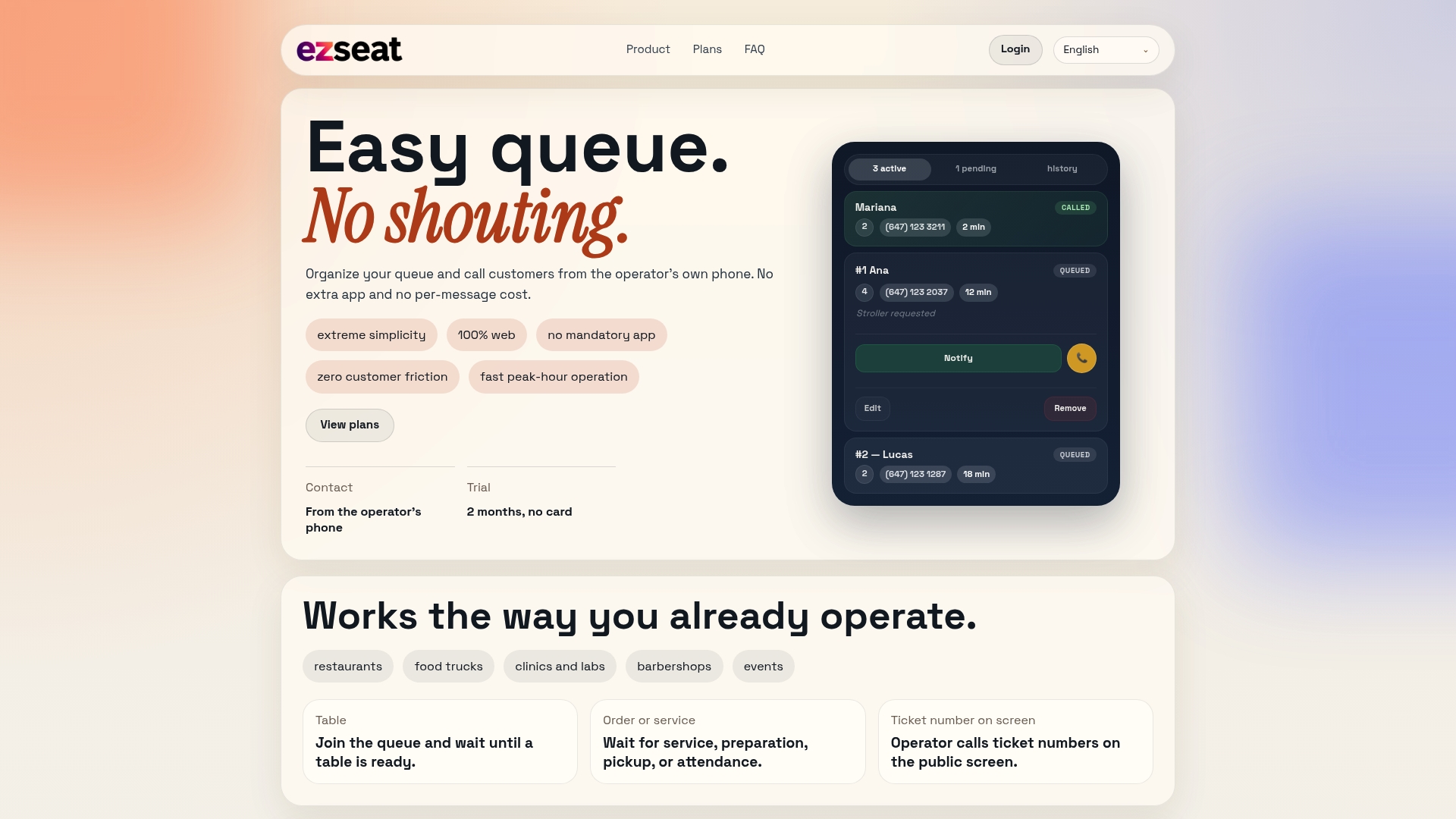
If you're running a shop where walk-ins and appointments constantly compete for the same three chairs, the fastest way to know if this fits is to run it during one real Saturday rush. Try Ezseat and see how your fill rate and wait times shift after a single busy shift.
Sources
For deeper setup help, see the QR code waitlist guide, tips on reducing no-shows, and salon automation strategy.